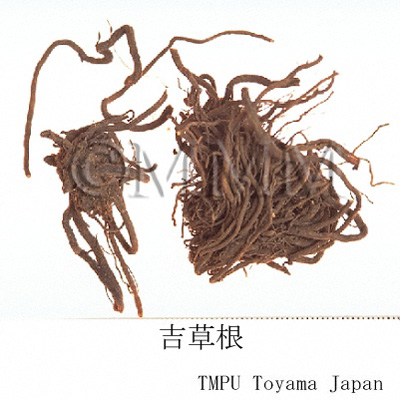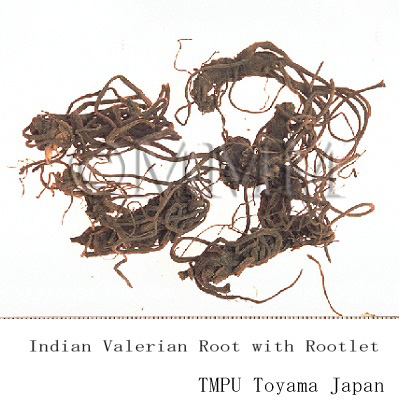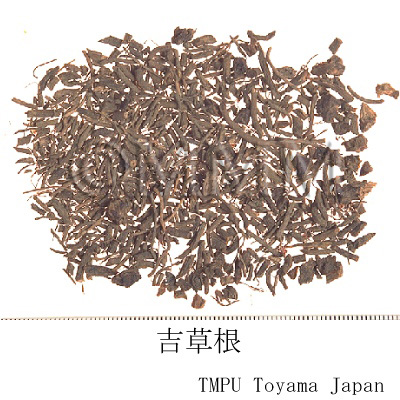

Crude drug sample data base
※Click on the image to enlarge it.
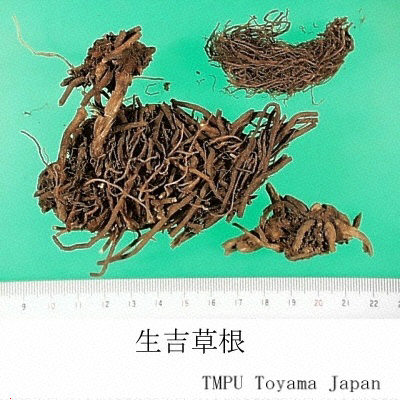
Crude drug name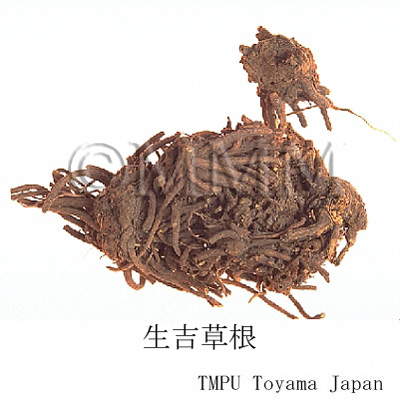 | Market name | 生吉草根 |
|---|---|---|
| Formal name | カノコソウ,吉草根 | |
| Japanese name | カノコソウ: かのこそう, Kanokosō, 吉草根: きっそうこん, Kissōkon | |
| Latin name | Valerianae fauriei Radix (JP) | |
| English name | Japanese Valerian (JP) | |
| Original plant name | Valeriana fauriei Briquet (f. yezoensis Hara), Kanokoso (Ezokanokoso) | |
| Family name | Valerianaceae | |
| Used part | Classification | Plant origin | Sub classification | root + rhizome |
| Collection information | Japan, Osaka Pref. , Nippon Funmatsu Yakuhin Co.,Ltd. | |
| Collection date | 1970/05/00 | |
| TMPW No. | 1118 | |
The capital city, provincial capital city or the representative
location of its administrative area is indicated.
location of its administrative area is indicated.
Production area information
https://ethmed.toyama-wakan.net/img/pin_san.png
34.6937378
135.50216509999996
Collection information
Japan,Osaka Pref.
https://ethmed.toyama-wakan.net/img/pin_nyu.png
Scientific information data base
| Common name | カノコソウ, 吉草根, Kanokosō, Kissōkon, Valerianae Fauriei RadixJP, Japanese ValerianJP | |||||
|---|---|---|---|---|---|---|
| Synonyms | 纈草根 | |||||
| crude drug image |
| |||||
| Original plant name | Valeriana fauriei Briquet1, (Kanokoso1, Ezokanokosō (Hokkaikissō)) | |||||
| original plant image |
| |||||
| Family name | Valerianaceae | |||||
| Used part | root and rhizome | |||||
| Quality for selection | Those with numerous fibrous roots and a reddish-brown color are considered to be of good quality (TN). | |||||
| Official compendium | JP XIX | |||||
| Clinical application | It is used as a sedative, antispasmodic, and carminative for hysteria and palpitations, in the form of an infusion (up to 6 g per day), tincture, or powder (up to 1.5 g per day). It is also used as a raw material for household medicines. | |||||
| Medical system | Traditional Chinese medicine | |||||
| Chemical constituent | Monoterpenoids V. fauriei 精油 [volatile oil] 1~8% (*C1, C2): Cineole, Camphene, Limonene, p-Cymene, Borneol, alpha-Pinene, beta-Pinene, Terpineol, Bornyl isovalerate(主成分約 [major constituent about] 90%), Bornyl acetate V. fauriei Briq. f. yezoensis Hara (*C1): イリドイド配糖体/iridoid glycoside: Kanokoside A, Kanokoside B, Kanokoside C, Kanokoside D Sesquiterpenoids V. fauriei 精油 [volatile oil] 1~8% (*C1): alpha-Kessyl alcohol, alpha-Kessyl glycol, alpha-Kessylacetate, Kessoglycol, Kessazulene (Guaiazulene), Kessane, Kessanol, 8-epi-Kessanol, Valeranone(= Jatamansone), Kanokonol, Fauronyl acetate, Kanokonyl acetate, Cryptofauronol | |||||
| Chemical structure |    
※画像をクリックすると、拡大して表示されます。 | |||||
| Pharmacological effect | Sedative effects (kessoglycol diacetate, kessoglycol 2-acetate, kessoglycol 8-acetate); antidepressant effects (alpha-kessyl alcohol, kessanol, cyclokessyl acetate); anti-stress ulcer activity. | |||||
| DNA sequence | L13934, AJ236003 ; Traditioal Medical & Parmaceutical Database. | |||||
| Disease | Hysteria, Palpitation | |||||
| Formulation | ||||||
| Related drugs | Valerianae Rhizoma, Indian Valeriana (see "Remarks") | |||||
| References | JP: The 19th edition of the Japanese Pharmacopoeia. C1)The Encyclopedia of Wakan-Yaku with Color Pictures Vol. I, pp 132-133. C2) Outline of Pharmacognosy, a Textbook,p223. C3) Nat. Med., 55, 225, 231(2001). | |||||
| Remarks | Valerianae Rhizoma: Root or rhizome of Valeriana officinale L. of family Valerianaceae (Jap. name: Seiyokanokoso). Indian Valeriana: Root or rhizome of V. wallichii DC. and others. "Kissokon" is the substitute for European Valerianae, which has been listed in The Japanese Pharmacopoeia since its first edition (1886). The plants of genus Valeriana are not used in China. A Japanese crude drug "Kanokoso", which circulates in the Japanese market, originates from Hokkaikisso (a kind of "Ezokanokoso"). "Hokkaikisso" consists of two varieties, Botan and Tako. There are considerable disparity in medicinal properties between the lineages. (C3) | |||||
| Last renewal date | 2026/10/09 | |||||