
Crude drug sample data base
※Click on the image to enlarge it.
Crude drug name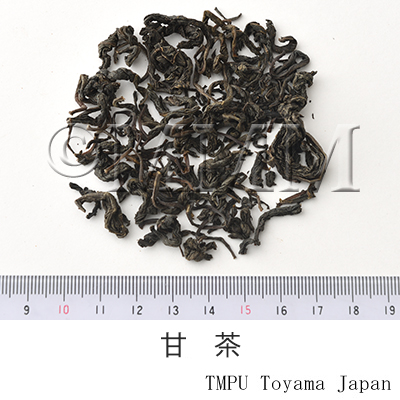 | Market name | 甘茶 |
|---|---|---|
| Formal name | 甘茶 | |
| Japanese name | あまちゃ, Amacha | |
| Latin name | Hydrangeae Dulcis Folium (JP) | |
| English name | Sweet Hydrangea Leaf (JP) | |
| Original plant name | Hydrangea macrophylla Seringe var. thunbergii Makino, (Amacha) | |
| Family name | Saxifragaceae | |
| Used part | Classification | Plant origin | Sub classification | leaf + spray |
| Collection information | Japan, Tokyo , Uchida Wakanyaku Co., Ltd. , Uchida Wakanyaku Co., Ltd. | |
| Collection date | 2016/09/06 | |
| Collector | Katsuko Komatsu | |
| Remarks | Sample to be used for the 3rd Kampo-Sommelier exam | |
| TMPW No. | 24025 | |
The capital city, provincial capital city or the representative
location of its administrative area is indicated.
location of its administrative area is indicated.
Production area information
https://ethmed.toyama-wakan.net/img/pin_san.png
35.6894875
139.69170639999993
Collection information
Japan,Tokyo
https://ethmed.toyama-wakan.net/img/pin_nyu.png
Scientific information data base
| Common name | 甘茶, Amacha, Hydrangeae Dulcis Folium (JP), Sweet Hydrangea Leaf (JP) | |||||
|---|---|---|---|---|---|---|
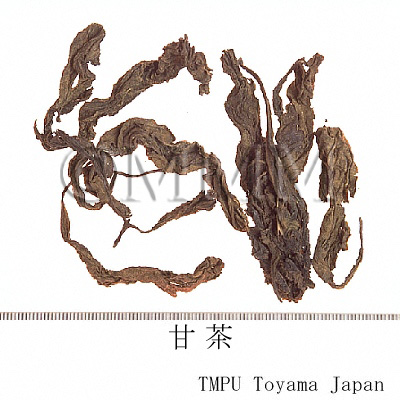
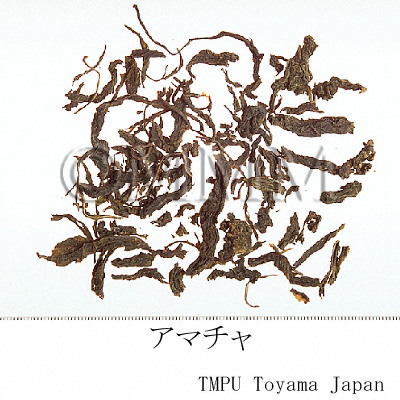
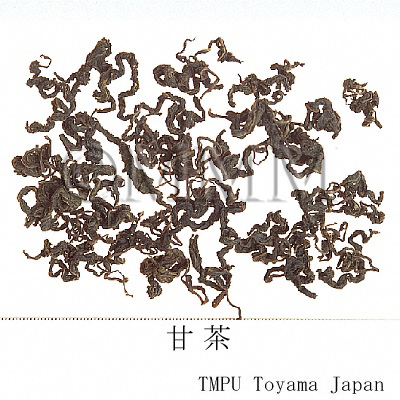
| crude drug image |
| |||||
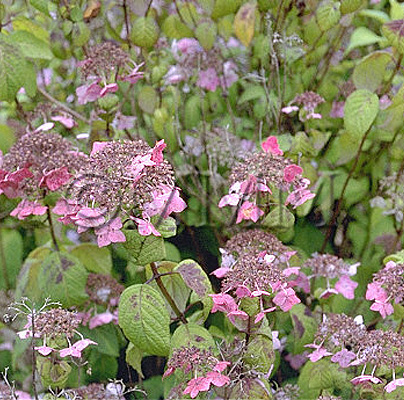
| Original plant name | Hydrangea macrophylla Seringe var. thunbergii Makino, (Amacha) | |||||
| original plant image |
| |||||
| Family name | Saxifragaceae | |||||
| Used part | leaf and spray | |||||
| Quality for selection | A good-quality one is dark green to dark yellowish-green and contains no foreign matter other than leaves. (TN) | |||||
| Official compendium | JP XIX | |||||
| Clinical application | It is used as a sweetening and flavor-correcting agent and as a raw material for the manufacture of household medicines and oral refreshers. | |||||
| Medical system | Folk medicine | |||||
| Drug effect in traditional medicine | Traditional classification | Japan | ||||
| Chemical constituent | Phenylpropanoids (*C2): Chlorogenic acid Flavones & Flavonols (*C2): Kaempherol, Quercetin, Rutin Coumarins (*C2): Umbelliferone Isocoumarins (*C1,C2): d-Phyllodulcin, Hydrangenol Phenol derivatives (*C1): Hydrangea-glucoside A, Hydrangea-glucoside B, Hydrangea-glucoside C (*C2): p-Hydroxybenzoic acid, Gallic acid | |||||
| Chemical structure |   
※画像をクリックすると、拡大して表示されます。 | |||||
| Pharmacological effect | Not exactly known. | |||||
| Formulation | ||||||
| References | JP: The 19th edition of the Japanese Pharmacopoeia. C1)The Encyclopedia of Wakan-Yaku with Color Pictures Vol. II, pp 86-87. C2)Outline of Pharmacognosy, a Textbook, pp 292-293. | |||||
| Remarks | Since the leaves are kneaded and slightly fermented, they are crimpled. Though raw leaves have no sweetness, the process (kneading, fermenting and so on) results in phyllodulcin which is the hydrolysate and the component of sweetness. The history of its medicinal use is short. Amacha was used as amachato, the extract of Amacha, at Kanbutsue, the celebration for Buddha's birthday (April 8th) in Edo period. | |||||
| Last renewal date | 2026/05/12 | |||||