
Crude drug sample data base
※Click on the image to enlarge it.
Crude drug name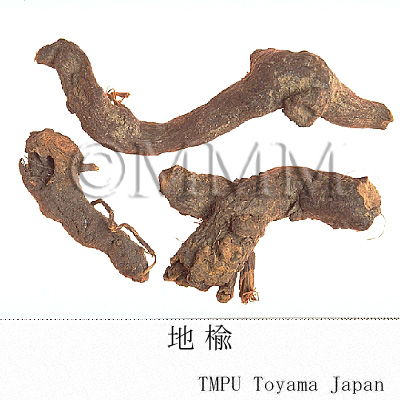 | Market name | 地楡 |
|---|---|---|
| Formal name | 地楡 | |
| Japanese name | ちゆ, Chiyu | |
| Vernacular name | Diyu | |
| Latin name | Sanguisorbae Radix (CP) | |
| English name | Garden Burnet Root (CP) | |
| Original plant name | Sanguisorba officinalis L. or Sanguisorba officinalis L. var. longifolia (Bert.) Yu et Li, (Waremokō or its varietas) | |
| Family name | Rosaceae | |
| Used part | Classification | Plant origin | Sub classification | root |
| Production area information | People's Republic of China | |
| Collector | Katsuko Komatsu, et al. | |
| TMPW No. | 284 | |
Scientific information data base
| Common name | 地楡, Diyu, Sanguisorbae RadixCP, Garden Burnet RootCP | |||||
|---|---|---|---|---|---|---|
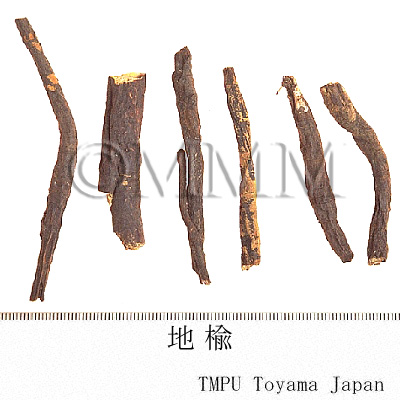
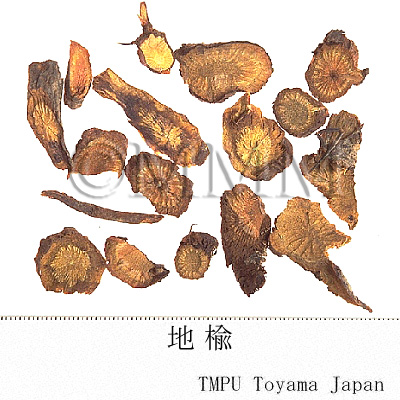
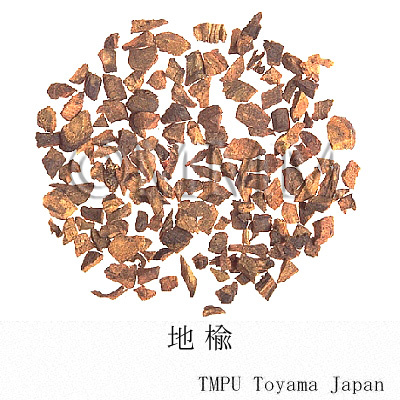
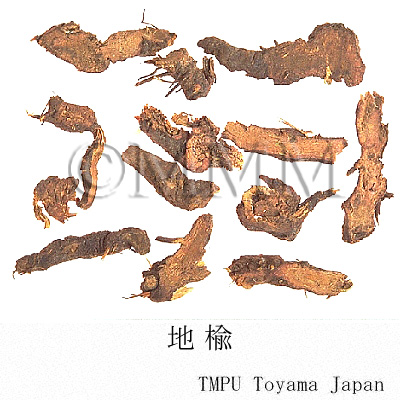
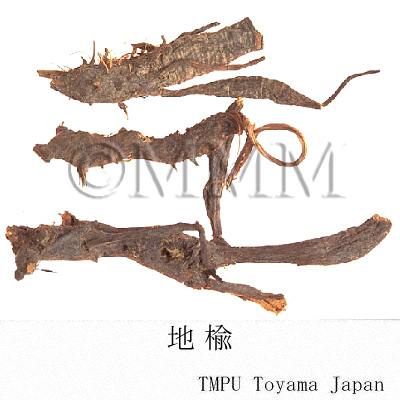
| crude drug image |
| |||||
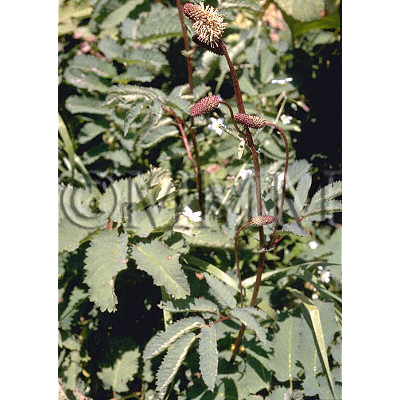
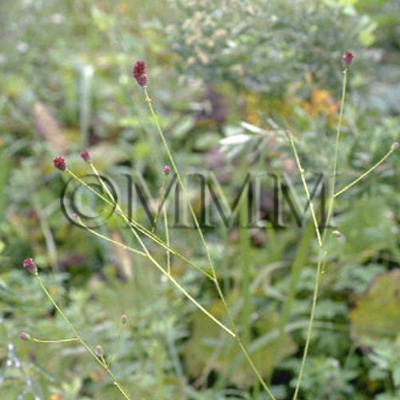
| Original plant name | Sanguisorba officinalis L.1, Sanguisorba officinalis L. var. longifolia (Bert.) Yu et Li or the variant species, (Waremokō1 and its varietas) (B1) | |||||
| original plant image |
| |||||
| Family name | Rosaceae | |||||
| Used part | root | |||||
| Quality for selection | The preferred one has a dark brown outer surface and a white interior, with longitudinal wrinkles and grooves on the surface. The middle portion is thickened, and both ends bear slender, newly developed taproots (NI). | |||||
| Official compendium | CP (2025 ed.) | |||||
| Clinical application | It is used as an astringent and hemostatic, it is indicated for bloody dysentery, anal fistula, uterine hemorrhage, hematemesis, hemoptysis, hematochezia, menorrhagia, and lower gastrointestinal bleeding. It is also highly effective as a topical treatment for dermatitis, mucositis, eczema, lacerations, and burns. | |||||
| Medical system | Traditional Chinese medicine | |||||
| Drug effect in traditional medicine | Traditional classification | Hemostatics | ||||
| Beneficial effect | [Property and Flavor] Mild cold; bittter, sour and agtringent. [Meridian Tropism] Liver and large intestine meridians. [Actions] To cool the blood to stanch bleeding , remove toxin and promote wound healing. [Indications] Bloody stool, hemorrhoid. bleeding, blood dysentery, flooding and spotting, scald and burn, swelling abscess, sore and toxin. | |||||
| Chemical constituent | Triterpenoid saponins (*C1): Sanguisorbin (ゲニン/genin = Tomentosolic acid), Ziyu-glycoside I, Ziyu-glycoside II (ゲニン/genin = Pomolic acid) Carotenoids & Vitamin A (*C1): Vitamin A (approx. 0.04%) Tannins (*C1): Tannin (approx. 17%) | |||||
| Chemical structure |  
※画像をクリックすると、拡大して表示されます。 | |||||
| Pharmacological effect | Suppression of bacteria (ethanol extract: Escherichia coli, myxomycete, Bacillus subtilis, Staphylococcus, Salmonella typhi, paratyphoid bacillus, Pseudomonas aeruginosa), antibacterial (Neisseria meningitidis). Antiinflammatory, suppression of apoptosis induced by the renal ischemia-reperfusion injury, restoration of renal function (administration in advance) (P1), improving the renal function due to LPS ( administration in advance, NO production system) (P2). | |||||
| DNA sequence | AF183533, AF183556 | |||||
| Classical reference (Chinese Herbal Classic "Zhenglei bencao") | 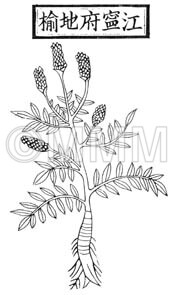 ※Click this image to see the actual image ※Click this image to see the actual image | |||||
| Disease | Hematemesis, Nasal hemorrhage, Hematuria, Hematochezia, Bleeding hemorrhoids, Hemorrhagic diarrhea, Irregular vaginal bleeding, Hypermenorrhea, Pyogenic dermatosis, Eczema, Incised wound, Burn | |||||
| Formulation | rarely used in formula | |||||
| References | CP: Pharmacopoeia of the People's Republic of China 2025 edi. B1)Shoyakugaku Zasshi, 39, 301-311 (1985). C1)The Encyclopedia of Wakan-Yaku with Color Pictures Vol. I, pp 70-71. P1)J. Trad. Med., 16, 97-101 (1999). P2)Biol. Pharm. Bull., 22, 1327-1330 (1999). | |||||
| Remarks | The original plant of Diyu (地楡) is Sanguisorba officinalis. The variants include var. longifolia (Bert.) Yu et Li, var. carnea (Fisch.) Regel ex Maxim. (Jap. name: Ezowaremokō), var. glandulosa (Kom.) Worosch and var. longifolia (Kitag.) Yu et Li. Besides the above, the root of following plants are used for medicinal purposes: S. tenuifolia Fisch. ex Link and S. tenuifolia Fisch. ex Link var. alba Trautv. et Meyer (Nagabonoshirowaremokō in Jap.) in northeast of China, S. applanata Yu et Li and its variants in Yantai of Shandong, S. alpina Bunge in a part of Ningxia. Also, the rhizome of Polygonum bistorta L. of family Polygonaceae (Ibukitoranoo in Jap.) is called Diyu in Guiyang of Guizhou and the rhizome of Polygonum cuspidatum Sieb. et Zucc. (Itadori in Jap.) is called "Tudiyu" (土地楡, Dochiyu in Jap.) in southern Sichuan. As for the rest, in Xinyang of Henan the rhizome of Astilbe chinensis Maxim. ex Fr. et Sav. of family Saxifragaceae is called "Zidiyu" (紫地楡, Shichiyu in Jap.) or "Chidiyu" (赤地楡, Sekichiyu in Jap.) which is also the name for the root of Geranium strictipe Kunth of family Geraniaceae in Kunming of Yunnan. Additionally, in a part of Yunnan, the root of Potentilla peduncularis D. Don of family Rosaceae and P. siemersiana Lehm. are called "Baidiyu" (白地楡, Hakuchiyu in Jap.). However, all of them are misused for Diyu. In Korean market, most Diyu/Jiyu is the blended roots of S. officinalis L., S. officinalis L. var. longifolia (Bert.) Yu et Li and S. tenuifolia Fisch. ex Link var. alba Trautv. et Meyer. (B1) | |||||
| Last renewal date | 2026/07/23 | |||||