
Crude drug sample data base
※Click on the image to enlarge it.
Crude drug name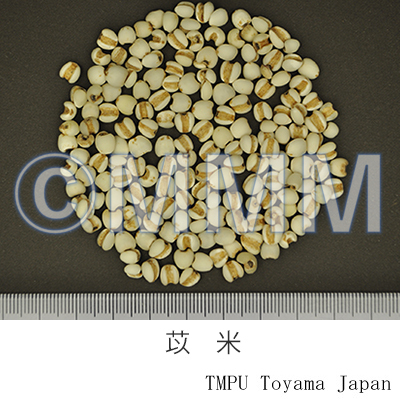 | Market name | 苡米 |
|---|---|---|
| Formal name | 薏苡仁 | |
| Japanese name | よくいにん,Yokuinin | |
| Vernacular name | Yiren | |
| Latin name | Coicis Semen (JP), (CP) | |
| English name | Coix Seed (JP), (CP) | |
| Used part | Classification | Plant origin | Sub classification | kernel |
| Production area information | People's Republic of China, Hunan Prov. | |
| Collection information | Japan(ToS), Osaka Pref. , Tochimoto Tenkaido Co., Ltd. [Non-commercial Sample] , Tochimoto Tenkaido Co., Ltd. [Non-commercial Sample] | |
| Collection date | 2019/11/27 | |
| Collector | Katsuko Komatsu | |
| TMPW No. | 30321 | |
The capital city, provincial capital city or the representative
location of its administrative area is indicated.
location of its administrative area is indicated.
28.228209
112.93881399999998
Production area information
People's Republic of China,Hunan Prov.
https://ethmed.toyama-wakan.net/img/pin_san.png
34.6937249
135.5022535
Collection information
Japan(ToS),Osaka Pref.
https://ethmed.toyama-wakan.net/img/pin_nyu.png
Scientific information data base
| Common name | 薏苡仁, Yiyiren, Coicis SemenJP,CP, Coix SeedJP,CP | |||||
|---|---|---|---|---|---|---|
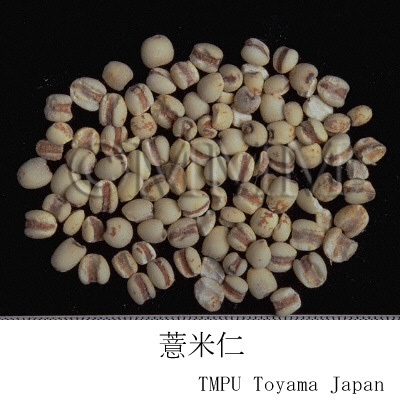
| crude drug image |
| |||||
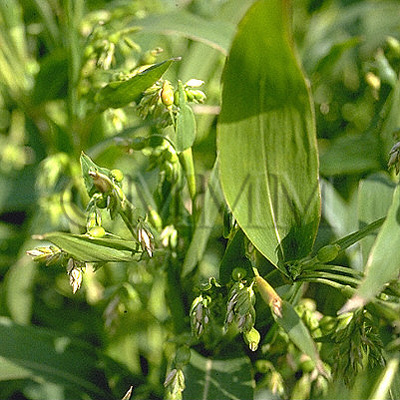
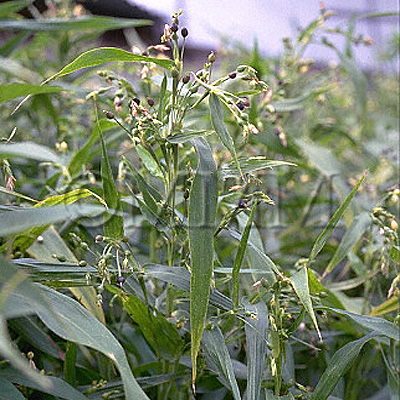
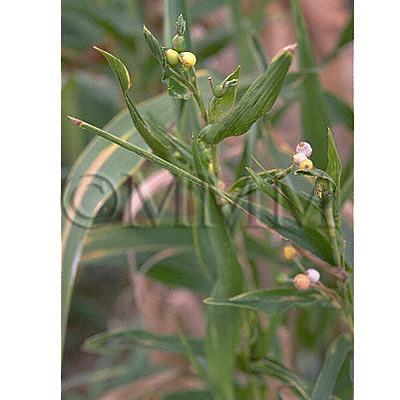
| Original plant name | Coix lacryma-jobi L. var. mayuen Stapf, (Hatomugi) | |||||
| original plant image |
| |||||
| Family name | Gramineae | |||||
| Used part | mature seed w/o seed coat | |||||
| Quality for selection | Large, nearly white, fresh grains free from insect damage are considered to be of good quality (TN). | |||||
| Official compendium | JP XIX, CP (2025 ed.) | |||||
| Clinical application | It is used as a diuretic, anti-inflammatory, analgesic, and pus-discharging agent for edema, rheumatism, neuralgia-associated pain, and suppurative diseases. In folk medicine, it is used as a remedy for warts and as a nutritive tonic. | |||||
| Medical system | Traditional Chinese medicine | |||||
| Drug effect in traditional medicine | Traditional classification | Diuretics removing dampness | ||||
| Beneficial effect | [Property and Flavor] Cool;l sweet, bland. [Meridian Tropism] Spleen, stomach and lung meridians. [Actions] To promote urination to drain dampness, fortify the spleen to check diarrha, relieve impediment, expel pus, remove toxin and dissipate binds. [Indications] Edema, tinea pedis, inhibited urination, diarrhea caused by spleen deficiency, spasm caused by fixed impediment, lung abscess, intestinal abscess, vegetation, tumor. | |||||
| Chemical constituent | Lipids (*C1): Palmitic acid, Myristic acid, Linolic acid, cis-8-octadecenoic acidなどのglycerides Other aliphatic and related compounds (*C1): Coixenolide Polysaccharides (*C1): 澱粉 / starch Sterols (*C1): beta-Sitosterol, Campesterol, Stigmasterol Amino acids (*C1): Glutamic acid, Leucine, Tyrosine, Valine Alkaloids 根/root (*C1): Coixol | |||||
| Chemical structure |  
※画像をクリックすると、拡大して表示されます。 | |||||
| Pharmacological effect | respiratoy action (low dose; accelerated, high dose; palsy), pulmonary vasodilation. | |||||
| DNA sequence | Traditioal Medical & Parmaceutical Database. | |||||
| Classical reference (Chinese Herbal Classic "Zhenglei bencao") | 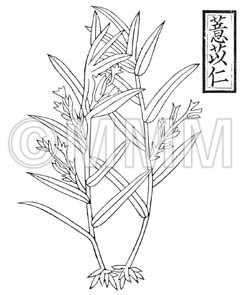 ※Click this image to see the actual image ※Click this image to see the actual image | |||||
| Disease | Edema, Oliguria, Fever, Feeling of heavy and dull, Feeling of pressure in the chest, Diarrhea, Swelling and pain of joint, Numbness, Lung suppurations, Appendicitis, Muddy and watery stool, Leukorrhea | |||||
| Formulation | Jinryobyakujutsusan, Makyoyokukanto, Choyoto, Toryuto, Yokuininto, Yokuininto, Yokuibushihaishosan, Ikeito, Ikeigoshijunto, Kashininto, Kikyoto, Shimotsutokakkekagen, Seishitsuto, Jiohanho, Choyotokashakuyaku, Botanpisan | |||||
| References | JP: The 19th edition of the Japanese Pharmacopoeia. CP: Pharmacopoeia of the People's Republic of China 2025 edi. C1)The Encyclopedia of Wakan-Yaku with Color Pictures Vol. I, pp 306-309. | |||||
| Remarks | Yiyiren is the seed of Coix lachryma-jobi Linn. var. mayuen Stapf (Hatomugi in Jap.), from which the seed coat has been removed. The seed with the seed coat is commercially available under the name of Hatomugi or Yokuinin. In China it is called Yimi. | |||||
| Last renewal date | 2026/07/17 | |||||