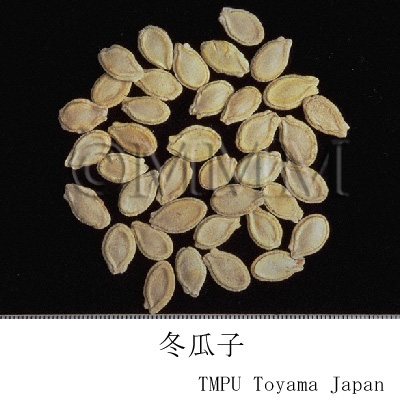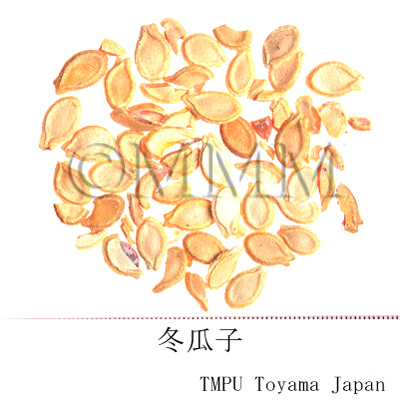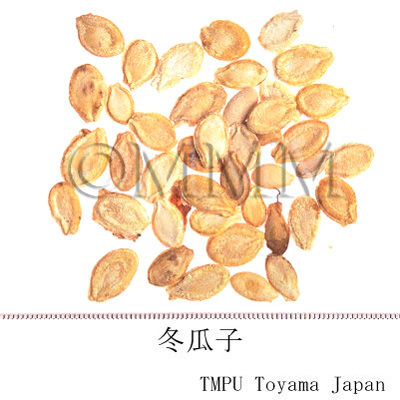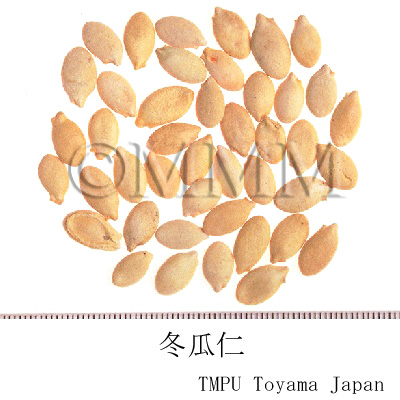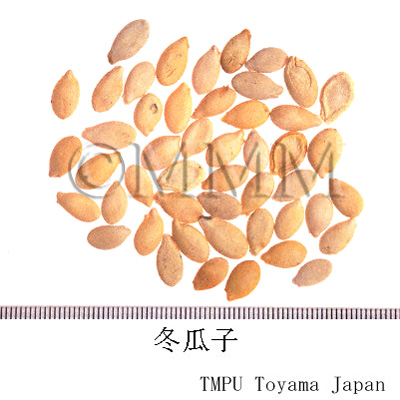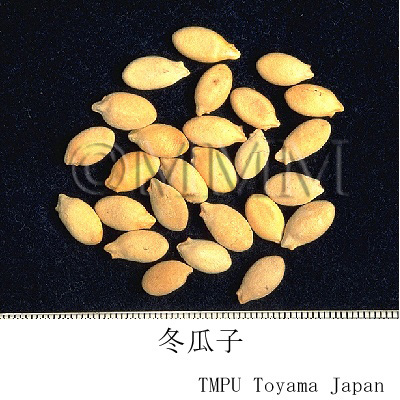

Crude drug sample data base
※Click on the image to enlarge it.
Crude drug name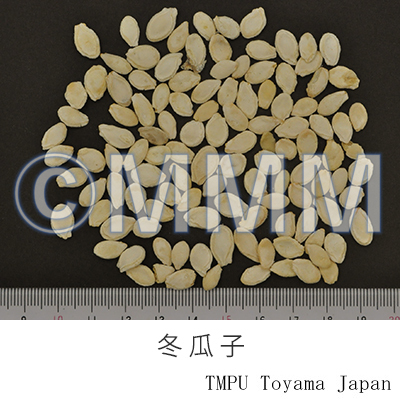 | Market name | 冬瓜子 |
|---|---|---|
| Formal name | 冬瓜子 | |
| Japanese name | とうがし, Tōgashi | |
| Vernacular name | Dongguazi | |
| Latin name | Benincasae Semen (JP) | |
| English name | Benincasa Seed (JP) | |
| Used part | Classification | Plant origin | Sub classification | seed |
| Production area information | People's Republic of China, Jiangsu Prov. | |
| Collection information | Japan(ToS), Osaka Pref. , Tochimoto Tenkaido Co., Ltd. [Non-commercial Sample] , Tochimoto Tenkaido Co., Ltd. [Non-commercial Sample] | |
| Collection date | 2021/10/11 | |
| Collector | Katsuko Komatsu | |
| TMPW No. | 31356 | |
The capital city, provincial capital city or the representative
location of its administrative area is indicated.
location of its administrative area is indicated.
32.060255
118.796877
Production area information
People's Republic of China,Jiangsu Prov.
https://ethmed.toyama-wakan.net/img/pin_san.png
34.6937249
135.5022535
Collection information
Japan(ToS),Osaka Pref.
https://ethmed.toyama-wakan.net/img/pin_nyu.png
Scientific information data base
| Common name | 冬瓜子, Dongguazi, Benincasae Semen (JP), Benincasa Seed (JP) | |||||
|---|---|---|---|---|---|---|
| Synonyms | 子冬瓜子 | |||||
| crude drug image |
| |||||
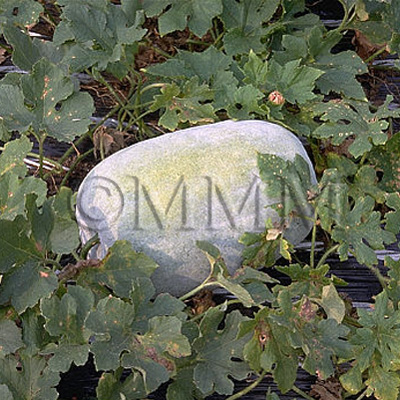
| Original plant name | Benincasa cerifera Savi1, Benincasa cerifera Savi forma emarginata K. Kimura et Sugiyama, (Tōgan1 (Tōga, Kamouri)) | |||||
| original plant image |
| |||||
| Family name | Cucurbitaceae | |||||
| Used part | mature seed | |||||
| Quality for selection | Those that are well-developed and well-ripened, with thickened margins and a white color, are considered to be of good quality (NI). | |||||
| Official compendium | JHMC (1989), JP XIX | |||||
| Clinical application | t is used as an antitussive, expectorant, purulent-draining, and anti-inflammatory diuretic, and is applied in cases of cough with heat-phlegm, as well as for pulmonary abscess, intestinal abscess, edema, and suppurative disorders of the internal organs. | |||||
| Medical system | Traditional Chinese medicine | |||||
| Drug effect in traditional medicine | Traditional classification | Expectorants | ||||
| Beneficial effect | To clear away heat and phlegm, to resolve carbuncle, to drain pus and to relieve dampness.: For phlegm with heat, cough, carbuncle of lung or bowel, hematemesis with blood abscess, appendicitis, gonorrhea and leukorrhea. | |||||
| Chemical constituent | Lipids (*C1): 脂肪油 / fatty oil Triterpenoids (*C1): サポニン1.0%未満 / saponin below 1.0% Peptide (*C1): 蛋白質 / protein | |||||
| Pharmacological effect | Not exactly known. | |||||
| Classical reference (Chinese Herbal Classic "Zhenglei bencao") | 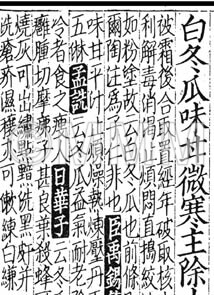 ※Click this image to see the actual image ※Click this image to see the actual image | |||||
| Disease | Cough, Lung suppurations, Nasal congestion, Sputum with blood, Appendicitis, Cloudy urine, Urodynia, Dysuria, Leukorrhea | |||||
| Formulation | Daiobotampito, Choyoto, Toryuto, Yokuininto, Ikeito, Ikeigoshijunto, Kashininto, Katsuketsusan'oto, Choyoto, Choyotokashakuyaku | |||||
| Related drugs | Dongguapi, the external layer of the pericarp. | |||||
| References | JP: The 19th edition of the Japanese Pharmacopoeia. CP: Pharmacopoeia of the People's Republic of China 2025 edi. C1) The Encyclopedia of Wakan-Yaku with Color Pictures Vol. I, pp 219-220. | |||||
| Remarks | The Japanese Pharmacopoeia (19th edi.) defines the seeds of Benincasa cerifera Savi (Jap. name: Tōgan) and B. cerifera Savi forma emarginata K. Kitamura et Sugiyama as its original plant. B. cerifera is the synonym of B. hispida. This species has wax separated out on the surface of its fruit. The surface of the seed is velvety and the seed has a thick band along its edge (Sōhentōgashi). On one hand, Tanhentōgashi originated from B. cerifera forma emarginata has neither wax nor a thick band. The Pharmacopoeia of the People's Republic of China (2025 edi.) lists Dongguapi but not Dougguazi. Dongguapi (Exocarpium Benincasae) is the outer pericarp of B. hispida, and is used as a diuretic and anti-edema agent. It is applied to edema with abdominal distension, dysuria, thirst due to summer-heat, and scanty, dark urine. | |||||
| Last renewal date | 2026/05/21 | |||||