
Crude drug sample data base
※Click on the image to enlarge it.
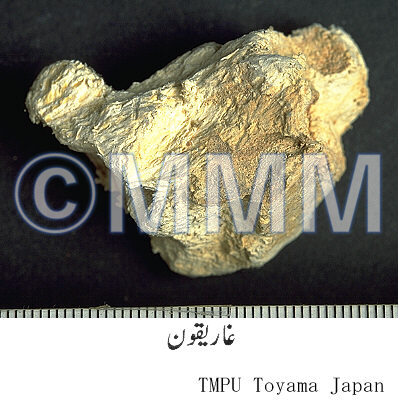
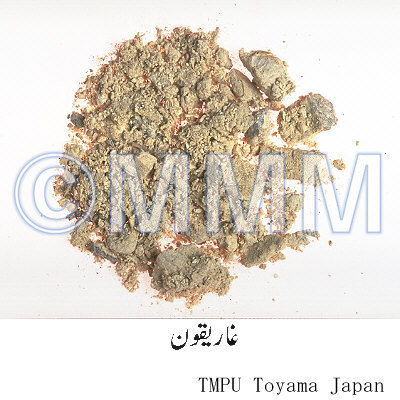
Crude drug name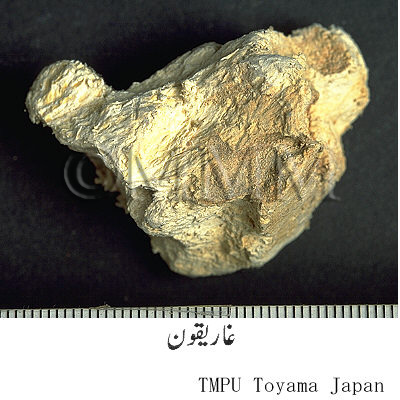 | Market name | Gwari-Qoom |
|---|---|---|
| Urudu name | Ghariqun | |
| Arabic name / Persian name | Ghariqun, Mashman / Mashman | |
| English name | The white Agaric (Fungus) | |
| Original plant name | Polyporus officinalis Fries, The white Agaric (Fungus) Family: Polyporaceae | |
| Family name | Polyporaceae | |
| Used part | Classification | Plant origin | Sub classification | fungus |
| Collection information | People's Republic of Bangladesh, Dacca [Dhaka] , Essa Bros. & Co. , Essa Bros. & Co. | |
| Collection date | 1964/3/6 | |
| Collector | Tsuneo Namba | |
| Identifier | Javed Ahmad | |
| TMPW No. | 9595 | |
The capital city, provincial capital city or the representative
location of its administrative area is indicated.
location of its administrative area is indicated.
Production area information
https://ethmed.toyama-wakan.net/img/pin_san.png
23.810332
90.41251809999994
Collection information
People's Republic of Bangladesh,Dacca [Dhaka]
https://ethmed.toyama-wakan.net/img/pin_nyu.png
Scientific information data base
| Crude drug name | Urudu name, English name | Ghariqun, The white Agaric (Fungus) | |||
|---|---|---|---|---|---|
| Arabic name / Persian name | Ghariqun, Mashman / Mashman | ||||
| crude drug image |
| ||||
| Original plant name | Polyporus officinalis Fries | ||||
| Family name | Polyporaceae | ||||
| Used part | Entire body (pieces) | ||||
| Distribution area | It is a fungus which grows on the old pine trees in Central and Southern Europe. It is found on the old trunks of various coniferous trees. | ||||
| Description | In the market the drug is available in small white pieces, light in weight, fibrous in structure, smooth, ungulated and spongy too. A section of the people think that it grows in the midst of old and decaying trees as a result of their putrefaction. It is hot, pungent and astringent in taste and contains watery, airy, earthy and tenuous substances. Odour is acrid. At early stages some sweetness in taste is also found. This, after sometimes, changes to bitterness. Before taking it, one should carefully determine the dose strictly in accordance with the severity of disease, power of resistance, age, habit and climate. According to Ibn Maswaih it may be of two types: male and female. The best kind of white agaric is that which is soft, white, light, brittle and having firm and smooth extremities. It should also have some sweetness along with bitterness. It has a splintered appearance. These Features are found in male white agaric, the female one is not so good. The hard and black varieties are considered inferior in quality. | ||||
| Function and properties | Swellings, Joints, Head, Chest, Liver, Fevers, Excretion. Deobstruent, demulcent, styptic, diuretic and emmenagogue. In small doses it acts as astringent, anticatarrhal for bronchial secretions, desiccant for milk secretion (in breasts), removes all kinds of visceral obstructions and expels malhumours and in large doses it acts as emetic. It is dissolvent and makes dilute of thick humours. | ||||
| Specific actions | Purgative of atrabile and excess phlegm, diuretic and emmenagogue. | ||||
| Frequency in use | Rare in India. | ||||
| Common uses | Swellings: It is useful for all kinds of swellings. Joints: It is taken with oxymel in cases of sciatica. Its chief characteristic is to remove 'superfluous matters' from nerves. It is also beneficial in neural fatigue and in fall from high places. Its oral dose is 750 mg. Head: It is also useful in epileptic disease and it clears off 'superfluous matters' from the brain. Chest: Oral intake is useful in cases of asthma and ulcers of the lungs. When 2.25 gm of it is taken with water, it proves to be useful in chest haemoptysis/hemoptysis. Liver: White agaric is useful in jaundice. It is taken with oxymel in cases of splenitis. When chewed as such or swallowed, it proves to be beneficial in gastralgia and sour eructation. 3.5 gm is taken in cases of hepatalgia. Fevers: In fevers, it should be taken with water-mead or rose water. It is beneficial in shivering and chronic fevers of severe nature. The effects are particularly seen when it is taken with wine before the attack. Excretion: It purges out different thick humours of black bile and phlegm. Its dose is 3.5 to 7gm, administered with water-mead. It possesses diuretic and emmenagogue properties and gives relief in nephralgia. Dosage for this purpose is 3.5gm. It is also beneficial in cases of hysteria. It also used for treating colic. | ||||
| Side effect | Large doses may give rise to watery motions, nausea and vomiting, excessive sweats, convulsions and infection in throat. Regarded as harmful for nursing mothers. It is used as plaster in cases of insect bites. When taken 3.5 to 4.5gm with wine, it proves to be useful in such cases. Its plaster is also used on the bites of those insects which contain cold poisons. | ||||
| Medical system | Unani | ||||
| Traditional concept | Temperament | It is hot in the first degree and dry in the third degree (Kabiruddin). It is hot in the first and dry in the second degree (Avicenna). | |||
| Drug effect | The drug produces quinsy and anguish. It is beneficial in excess phlegm and atrabile; diuretic and emmenagogue. | ||||
| Comments | Ghariqun nim Kofta (semi-grounded drug) is used in compound formulations. The drug is grounded and sieved and then it is called ghariqun mughbil. The drug alone is seldom in use. It is often incorporated with other drugs. | ||||
| Dosage | 500 mg to 2 gm (approximately). | ||||
| Substitute | Hanzal (Citrullus colocynthis Schrad). | ||||
| Related drugs | Agaricus alba Linn., Agaricus (Mushroom); Fam. Agaricaceae. | ||||
| Corrigent (corrective) | Jundbedistar (castoreum) and fresh milk. | ||||
| Important compound preparations | Habb-i-Ayarij, Sherbat Mushil, Ma`jun Talkh and Ma`jun Murraweh-al Arwah. | ||||
| References | Reference book Tips! | Indian Materia Medica, Vols. 1-2, 1976 (Repr. 1989). Nadkarni, A.K., Popular Prakashan Pvt. Ltd., Bombay Vol. 1, p 1001. Makhzanul-Mufradat (Khawasul Adviyah), Hakeem Kabiruddin, Daftar Al-Masih, Qarol Bagh, Delhi. pp 408-409. A Survey of Drugs, 1961 (2nd edi.). Wahid, A. K. and Siddiqui, H. H. Institute of History of Medicine and Medical Research, Delhi. p 98. Dictionary of Economic Plants in India, 1996 (2nd Rep.). Singh, U; Wadhwani, A. M. and Johri B.M. Indian council of Agricultural Research, New Delhi. p 181. Al-Qanun Fil-Tibb. Avicenna. (English translation of the critical Arabic text), Book 2, 1998. Hameed, H. A. (editor), Dept. of Islamic Studies, Jamia Hamdard (Hamdard University), New Delhi. pp 335-336. Al-Jamili Mufradt Al Adwiya Wal Aghziya (1197-1248 A.D.). Ibn al-Baytar. Vols. 1-3, 1985-1999. Central council for Research in Unani Medicine, Janakpuri, New Delhi. Vol. 3, pp 330-333. Hamdard Pharmcopoeia of Eastern medicine, 1969. Said, H. M. (editor), The Times Press, Sadar Karachi. pp 95-96, 187, 263, 283-284. Indusyunic Medicine, 1997. Usmanghani, K., Saeed, A. and Alam, M. T. Department of Pharmacognosy, Faculty of Pharmacy, University of Karachi, Karachi. pp 237-238. Unani Adwiyah Mufradah, 1984. Ali, Saifuddin, A. (3rd edi.). Taraqi-e-Urdu Bureau, R. K. Puram, New Delhi. p 207. | |||
| Remarks | The drug ghariqun is described by all the Unani writers. Therefore, it seems it is an important drug. Agaricus alba has been mentioned as the source of ghariqun. Avicenna (Ibn Sina), Kabiruddin and Saifuddin have mentioned that the source of the drug is Polyporus officinalis. The later view seems more authentic and correct. Wahid and Siddiqui (1961) have mentioned that the drug is imported from Iran. | ||||
| Last renewal date | 2025/08/06 | ||||